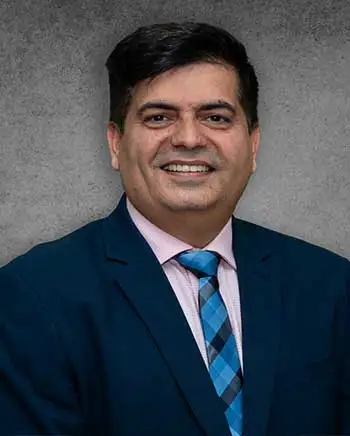
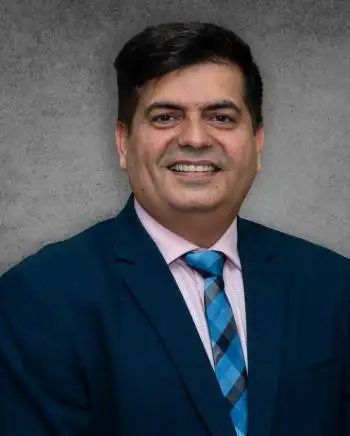
Brief Profile of research cluster head with picture
Dr. Sandeep Kumar is working as Professor in the Department of Sciences (Physics) at Manav Rachna University (MRU), Faridabad, India. He holds an M.Tech. in Applied Optics and Ph.D. degree in Plasma Physics from Indian Institute of Technology (IIT), New Delhi. After completing his Ph.D., he joined POSTECH, Pohang, South Korea, as a postdoctoral fellow (2006–2009) under the Brain Korea 21 (BK21) fellowship.
From 2009 to 2014, he was associated with the Pohang Accelerator Laboratory (PAL). From 2015 to 2016, he served as a senior researcher at the Max Planck Centre for Attosecond Science, Pohang, Korea in collaboration with the MPIPC Systems, Dresden, Germany. From 2016 to 2018, he worked as a senior scientist at the Centre for High Energy Astrophysics, UNIST, and South Korea. His research focuses on photonics, particularly the study of shortest photon pulses in the XUV, soft X-ray, and hard X-ray regimes. His work includes THz generation and the development of next-generation light sources, such as high-brightness X-ray and gamma-ray sources using plasma-based GeV-scale table-top electron accelerators. In laboratory plasma astrophysics, his interests include studies of astrophysical plasmas, plasma instabilities using particle-in-cell (PIC) simulations. He has published over sixty international research papers in well-known SCI-indexed peer-reviewed journals. He serves as a reviewer for several leading physics journals and has actively contributed to conferences as a member of scientific and organizing committees. He has also convened and organized international conferences.
Vision
To advance knowledge in Materials and Applied Sciences fostering interdisciplinary collaboration advancing sustainable development and contributing to societal progress.
Mission
To develop the center into a Globally-Competitive Hub for all areas in material Science and Applied Science.
Foster a collaborative research environment to share ideas, methodologies and insights across disciplines.
Seek funding from governmental bodies, private organizations and philanthropic foundations that support research in Applied Sciences and sustainable materials.
Encourage innovation and the development of new materials and technologies that have a positive impact on sustainability.
Engage with local communities to understand their concerns, ensuring that research efforts contribute to Societal progress.


.png)


.webp)







 ADDRESS