Participative Learning
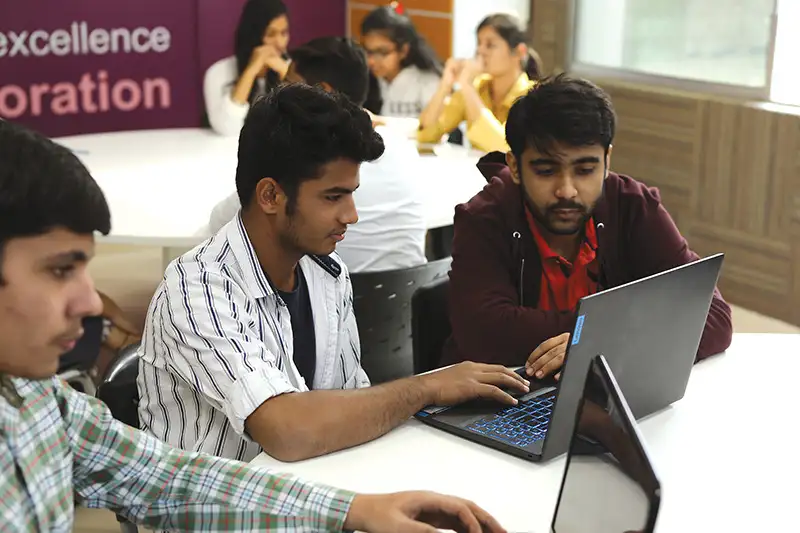
Students are encouraged to co-construct knowledge in every session through structured discussions, open questioning, and peer dialogue. Rather than passive note-taking, classrooms are designed as interactive forums where students debate concepts, challenge assumptions, and build understanding through active participation. Faculty facilitate structured think-alouds, Socratic questioning, and real-time polling to keep engagement high.
Project Based Learning
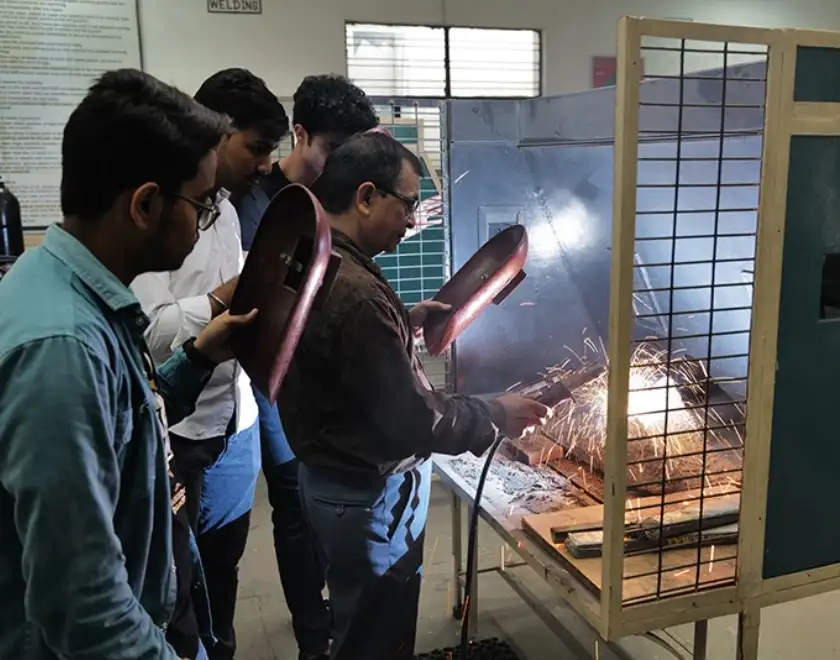
MRU’s Project-Based Learning (PBL) approach transforms education beyond traditional classrooms by engaging students in real-world problem solving. Students work on industry-relevant projects, fostering innovation, critical thinking, and practical application of knowledge.
Experiential Learning
Project Based Learning Industrial Visits Internships Labs & Workshops Trainings Industry Projects ...
Employment Enhancement Program
Elevate your career prospects with our Employment Enhancement Program. Focused on skill development, this initiative equips students with industry-relevant expertise, fostering a competitive edge in the job market. Through targeted training and real-world application, we empower graduates to excel in diverse professional landscapes.
Flipped Classrooms
In the flipped model, pre-recorded video lectures, reading materials, and concept modules are assigned as pre-class work via the university's Electronic Management System (EMS). Valuable face-to-face classroom time is then reserved entirely for higher-order activities — problem-solving exercises, collaborative projects, case discussions, and peer critique — ensuring deeper learning and better retention.
Role Play and Simulations
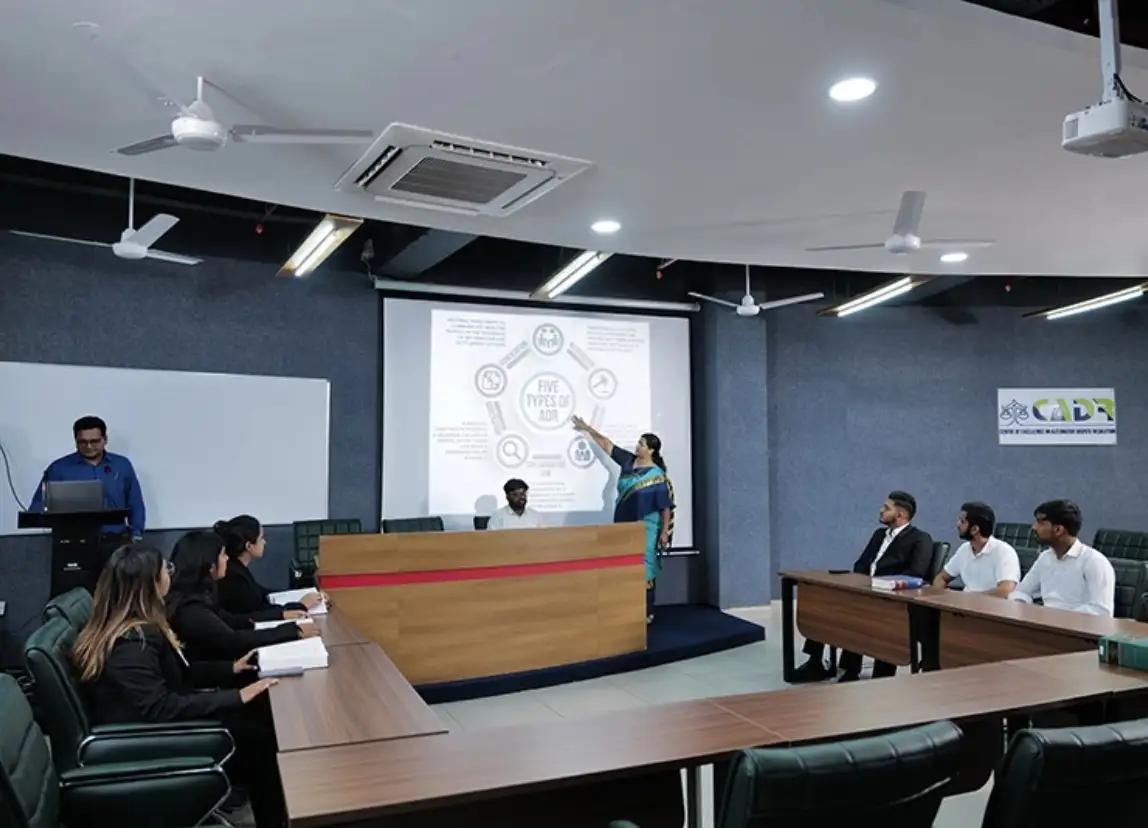
Role-playing and simulation exercises are embedded across disciplines to replicate professional and real-world scenarios in a safe classroom environment. Law students argue courtroom cases; business students negotiate contracts; education students conduct mock teaching sessions; engineering students simulate system failures. This approach develops decision-making agility, professional empathy, and situational judgement.
Collaborative Learning
Teamwork is woven into the academic fabric at MRU. Students regularly work in structured groups on assignments, projects, case analyses, and presentations. Collaborative learning not only deepens subject understanding but also cultivates communication, conflict resolution, adaptability, and leadership — skills that are critical for professional success.
Webinars, Seminars, and Colloquiums
Regular webinars and seminars connect students to thought leaders, domain experts, and practitioners from industry and academia. Colloquiums provide a formal platform for students to present their own research and ideas, receive expert feedback, and engage in scholarly debate — building academic confidence and intellectual rigour.
Symposiums and Conferences
MRU organises and participates in inter-departmental and inter-university symposiums and conferences. Students are encouraged to submit papers, present their work, and engage with a broader academic community, fostering a culture of scholarly inquiry and academic exchange from early in their programme.
Club Activities and Student Chapters
Over 50 student clubs and professional chapters (IEEE, ISTE, AICTE-recognised bodies) operate across schools, offering students platforms to apply classroom learning in real contexts — robotics clubs, mock parliament, law society, business incubation cells, science forums, and more. These extracurricular learning spaces cultivate leadership, initiative, and domain passion.
Peer Learning and Reverse Mentoring
Senior students mentor juniors through structured peer-learning programmes, while reverse mentoring enables junior students with fresh digital and technological perspectives to share insights with senior peers and even faculty. This two-way exchange enriches the learning ecosystem and builds a culture of continuous, community-driven learning.
Gamified Learning and Challenge-Based Learning
Elements of gamification — leaderboards, badges, challenge levels, and reward systems — are integrated into select courses and online platforms to enhance motivation and sustained engagement. Challenge-based learning presents students with open-ended, real-world challenges that require creative, interdisciplinary thinking and iterative problem-solving.


.png)




 ADDRESS