Scholarship 1 Scholarship 2 Scholarship 3
UPTO 100% SCHOLARSHIPSAPPLY BY 02 JULY 2026
00
DAYS
00
HRS
00
MIN
00
SEC

About Academics

Academics at Manav Rachna University are defined by excellence, innovation, and future readiness.

Overview

Manav Rachna University (MRU) is committed to delivering a transformative and future-oriented learning experience that seamlessly integrates strong theoretical foundations with immersive, hands-on learning. The academic framework is aligned with the National Education Policy (NEP 2020) and the National Credit Framework (NCrF), ensuring flexibility, multidisciplinary exposure, and lifelong learning pathways.

The curriculum is dynamic, industry-aligned, and outcome-driven, offering students the flexibility to explore interdisciplinary pathways, electives, skill-based courses, and emerging domains. MRU adopts a wide spectrum of innovative teaching-learning approaches, including:

Simulated Teaching Enabled Programmes

Highlights of the programmes at MRU

Semester system with Choice Based Credit System (CBCS)
  • Learn at one’s own pace: Flexibility to register for the lesser or higher number of credits
  • Learners’ choice of courses: Flexibility to pick and choose courses from different areas. To enhance the quality of the student learning experience.
Holistic Development

Development of a person’s emotional, social, ethical, and creative potential through soft courses

Multidisciplinary approach

Small core and large elective basket. Flexibility to choose electives from other departments like Engineering, Management, Humanities, Sciences and Social Sciences.

Global Graduate Attributes

Programme design and delivery ensures development of Global Attributes (GAs)

Learning by Doing

Lab component with all courses, specialized workshops/projects with every semester

Emerging/Futuristic courses

Students’ exposure to emerging technologies/sciences

Environmental & Sustainable Development

Key components of all programmes

Research & Development

Early exposure to Research field.

image
Programme Structure

The university programme curriculum and delivery is designed to ensure development of Global Graduate Attributes as defined by International Professional Societies of the concerned areas. The courses in a Programme can be categorized on the basis of Course Type and Course Nature.

The programme structure at MRU is designed to develop Global Graduate Attributes aligned with international standards.

Integrated Course Categories (NEP 2020 & AICTE Aligned)

  • Basic Sciences (BS)
  • Engineering Sciences (ES)
  • Humanities & Social Sciences (HSS)
  • Discipline Core (DC) / Program Core (PC)
  • Discipline Specific Electives (DSE) / Program Electives (PE)
  • Open / Generic Electives (GE)
  • Ability Enhancement Courses (AEC)
  • Skill Enhancement Courses (SEC)
  • Value Added Courses (VAC)
  • Vocational Education & Training (VET)
  • Indian Knowledge System (IKS)
  • Environmental Education (EE)
  • Constitution / Ethics / Universal Human Values
  • Experiential Learning (Internships, Apprenticeships, Field Work)
  • Project Work (Mini / Major / Capstone)
  • Research, Innovation & IPR Courses
  • Workshops / Labs / Practical Courses

Course Components

image

Learning Environment at Manav Rachna University

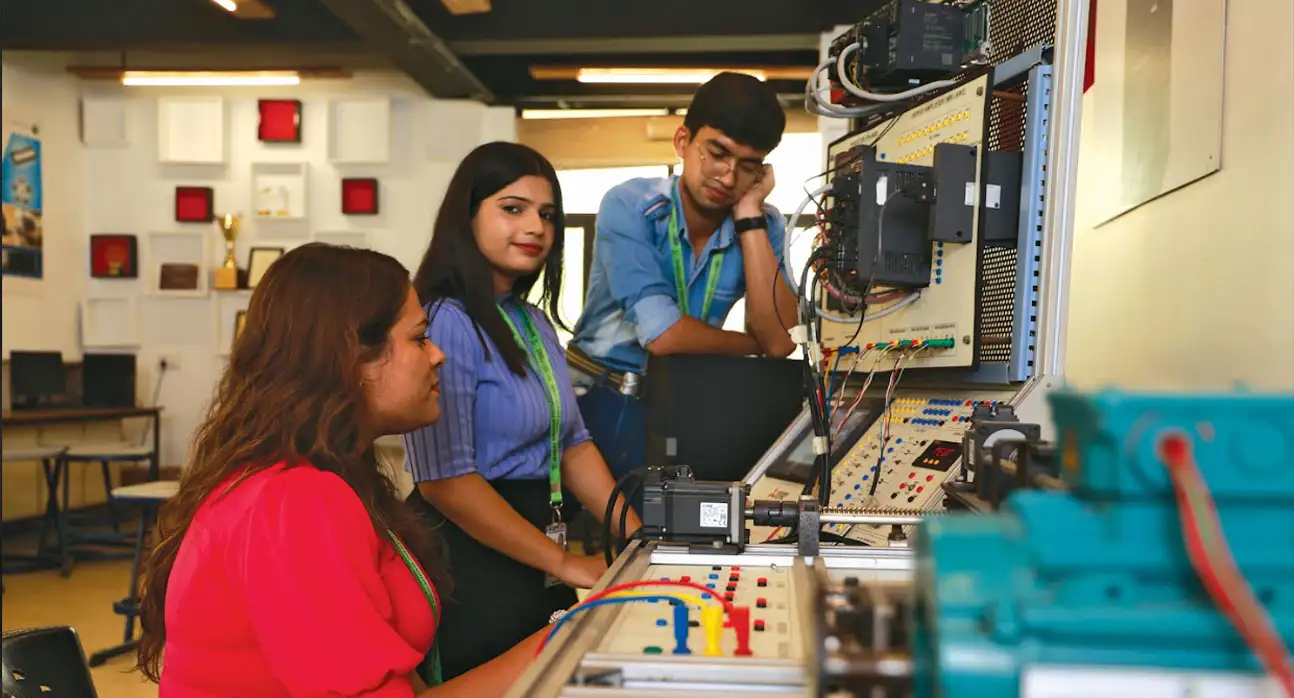
MRU provides a dynamic and future-ready learning environment that emphasizes holistic student development and industry readiness. The University follows an Outcome-Based Education (OBE) approach, focusing on measurable skills and competencies while ensuring strong alignment with industry expectations. It actively promotes “learning by doing” through mandatory trainings, laboratories, and workshops, enabling students to gain practical exposure alongside theoretical understanding. Students are encouraged to engage in self-learning and exploration, fostering curiosity, critical thinking, and independent learning habits.

At the core of this ecosystem is MRU’s student-centric, NEP-aligned teaching-learning philosophy, which integrates experiential and participative learning approaches. The University adopts diverse pedagogies such as project-based learning, case-based methodologies, role-play, and simulation-based learning to enhance engagement and real-world problem-solving abilities. A blended and digital learning ecosystem further enriches the academic experience through the use of virtual labs, simulations, and modern educational technologies.

MRU also nurtures a strong culture of research and innovation by supporting student-led ideas through funding, mentorship, and access to advanced facilities. The multidisciplinary framework enables students to explore cross-domain electives and collaborative projects, broadening their academic and professional horizons. Strong global linkages with international professional bodies further enhance exposure and learning opportunities.

To ensure continuous academic excellence, faculty members are regularly trained through Faculty Development Programs (FDPs) to adopt innovative pedagogies, emerging technologies, and advanced assessment methods. Additionally, Skill Enhancement Programs (EEP) are integrated into the curriculum to strengthen employability, communication, and professional readiness, preparing students to thrive in a rapidly evolving global landscape.

  • Project-Based Learning (PBL) – solving real-world challenges through structured projects
  • Experiential Learning – learning through labs, internships, fieldwork, and simulations
  • Flipped Classrooms – self-paced learning complemented by in-class application
  • Case-Based Learning – analysis of real industry scenarios
  • Problem-Based Learning – inquiry-driven learning for complex problem solving
  • Design Thinking Approach – fostering creativity and human-centered innovation
  • Collaborative & Cooperative Learning – peer learning and teamwork-based pedagogy
  • Role-Based Learning – aligning learning with industry roles and career pathways
  • Phenomenon-Based Learning – integrating concepts across disciplines to understand real-life phenomena
  • Blended & Digital Learning – integration of MOOCs, virtual labs, and AI-enabled tools
image
Employment Enhancement Program (EEPs)

The Employment Enhancement Program (EEP) is designed to strengthen employability and professional readiness by focusing on:

  • Technical and domain-specific skills
  • Soft skills and communication
  • Aptitude and personality development
  • Industry certifications and professional training
  • One course dedicated related to enhance employability skills
MRU focuses on holistic student development through structured enhancement initiatives:
  • Coaching & Mentoring – Personality development and communication skills
  • Employability Augmentation – Industry-recognized assessments
  • Professional Certifications – Six Sigma, Lean Management, etc
  • Career-Oriented Activities – Group discussions, mock interviews, and industry interactions

This ensures students graduate with a competitive edge in the job market.

Manav Rachna Comprehensive Score Card

The Manav Rachna Comprehensive Score Card (MRCS) is an innovative and holistic evaluation framework designed to capture the overall development of students beyond traditional academic grading. This scorecard will be shared alongside the academic report card. Unlike conventional report cards that primarily focus on marks, the Comprehensive Score Card offers a 360-degree evaluation of a student’s development across multiple dimensions.

image
Key Focus Areas

The Comprehensive Score Card evaluates students across three core pillars:

  • Knowledge Acquisition – Academic performance, conceptual understanding, and subject mastery
  • Employability Skills – Communication, problem-solving, leadership, and industry readiness
  • Student Engagement – Participation in projects, co-curricular activities, research, and community initiatives

This approach ensures that students are assessed not just on what they learn, but also on how effectively they apply, communicate, and contribute.

Purpose and Impact
  • Provides students with a clear insight into their strengths and areas for improvement
  • Encourages holistic development and self-reflection
  • Helps track progress across academic, professional, and personal domains
  • Aligns with NEP 2020 philosophy of multidisciplinary and outcome-based education

The MRCS acts as a developmental tool rather than just an evaluation mechanism, enabling students to celebrate achievements, build competencies, and continuously improve.

Strategic Significance

The Comprehensive Score Card also supports the university in:

  • Making data-driven academic decisions
  • Enhancing student learning experiences
  • Strengthening industry readiness and graduate outcomes
image
Interdisciplinary Projects

Interdisciplinary projects at MRU enable students to integrate knowledge across domains and solve complex real-world problems.

  • Promote cross-disciplinary collaboration
  • Enhance innovation and creativity
  • Expand career opportunities across multiple domains.
  • Develop teamwork, adaptability, and problem-solving skills
  • Encourage phenomenon-based and design-driven learning approaches

The best approaches ensure that students develop not only conceptual knowledge but also critical thinking, analytical ability, creativity, and application skills.

A strong emphasis is placed on personalized and outcome-driven education, supported by value-added certifications, industry-integrated modules, and exposure to emerging technologies such as Artificial Intelligence, Chip design,VLSI and Verification,Data Science, Robotics, and Advanced Engineering Tools.

MRU promotes the philosophy of “Learning without Labels”, encouraging cross-disciplinary collaboration among students and faculty through initiatives such as reverse mentoring, co-learning ecosystems, and interdisciplinary engagements.

Faculty members, with a blend of academic excellence and industry experience, act as mentors and facilitators, fostering an inclusive, engaging, and innovation-driven learning environment. Continuous curriculum enhancement is ensured through industry partnerships, internships, live projects, global collaborations, and international exposure opportunities.Research and innovation form a core pillar of the academic ecosystem. Students are actively encouraged to engage in research projects, interdisciplinary innovations, and startup initiatives, supported by Centres of Excellence, incubation centers, and state-of-the-art laboratories.

Overall, MRU nurtures a holistic academic ecosystem that builds intellectual curiosity, professional competence, ethical values, and lifelong learning skills, preparing students to thrive in a rapidly evolving global landscape.

Highlights of Program at Manav Rachna / Experience Collaborative Synergy at MRU

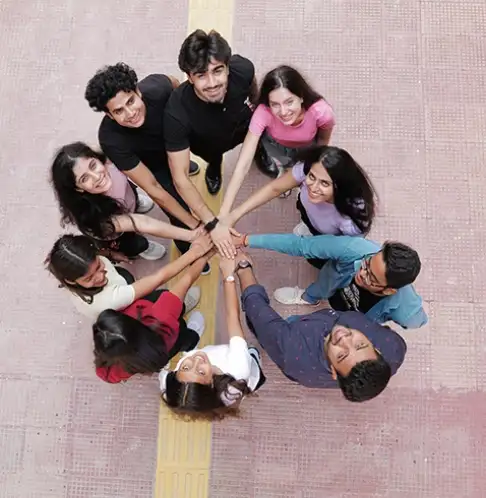
At MRU, a strong culture of collaborative synergy is cultivated, enabling students to actively engage with faculty, peers, and institutional leadership. The University provides a structured ecosystem that promotes teamwork, leadership, communication, and project management skills.

Students actively participate in academic, co-curricular, and institutional initiatives, gaining hands-on experience in conceptualizing, planning, and executing real-world projects. This exposure builds confidence, adaptability, and leadership capabilities.

MRU also encourages healthy competition and constructive peer learning, motivating students to continuously innovate and achieve excellence. Platforms such as student clubs, professional chapters, hackathons, and innovation challenges foster creativity and performance benchmarking.

The concept of “Clans” institutionalizes this collaborative culture by promoting team spirit, leadership development, participation, and healthy rivalry, ensuring holistic student engagement and competency development.

Contact Us

Icon location ADDRESS

Sector – 43, Aravalli Hills, Delhi – Surajkund Road, Faridabad – 121004, (Haryana), India