Courses After 12th Commerce 2026: Best Options Beyond CA and B.Com
26 Jun 2026
Picking the right career path after Class 12 Commerce can feel a bit overwhelming, especially when everyone keeps saying, "Go for CA or B.Com”. Yes, it's true that these choices are still really solid and valuable. But honestly, in 2026, the career choices for commerce students are way wider than the usual traditional roles.
Right now, many industries are actively seeking people who know finance, business analytics, digital marketing, banking, e-commerce, investment handling, and even fintech operations. Since companies are moving faster in a digital mode, commerce students can go for career-focused courses that actually match what companies need. These programs tend to have better growth potential and feel more relevant to real industry work.
So if you’re looking at courses after 12th commerce and you want to figure out which ones truly match current market demand, future scope, and your own interests, then this guide should make it easier to decide.
Why Students Are Exploring New Commerce Career Options in 2026
A few things have shifted the conversation around commerce education significantly.
First, the job market rewards people who can do more than one thing well. A finance person who understands data tools gets hired faster. A marketing person who can read analytics reports is more valuable than one who can't.
Second, the digital economy kind of sparked new job categories. For example, close to 61% of employers say they plan to bring in fresh hires across roles such as AML/KYC compliance, credit risk policy, and positions that are more regulatory-minded. Most of these areas weren’t exactly mainstream hiring tracks before 2019.
Third, students and parents are now paying much more attention to placement results, internship quality, and how skills are actually being built up, not just degree titles. That shift in mindset is very real, and you can already see it influencing how people choose their programs, even if it feels gradual.
Also, the best course after 12 commerce in 2026 isn’t a single set answer for every person. It depends on what you want to do, what you feel comfortable with, and where you picture yourself in the next few years.
Courses After 12th Commerce: Best Alternatives Beyond CA and B.Com
Before discussing courses after 12th commerce, let’s give you a quick comparison so you can quickly decide:
Course Name
Maths Needed
Course Time
Starting Salary
BBA
No
3 Years
₹3-5 LPA
BBA Business Analytics
Mostly Yes
3 Years
₹4-6 LPA
BCA
Mostly Yes
3 Years
₹3-5.5 LPA
FinTech Programs
Mostly Yes
3-4 Years
₹4-7 LPA
Economics (Hons.)
Yes
3 Years
₹4-6 LPA
Digital Marketing
No
6-12 Months
₹2.5-4.5 LPA
Event Management
No
1-3 Years
₹2.5-4 LPA
Hotel Management
No
3-4 Years
₹2.5-5 LPA
Actuarial Science
Yes
3-5 Years
₹5-8 LPA**
BBA LLB
No
5 Years
₹3-6 LPA
CS (Company Secretary)
No
3-5 Years
₹4-7 LPA
CMA
No
3-4 Years
₹4-7 LPA
CFP
No
6 Months-2 Years
₹3-6 LPA
Financial Modeling Certification
No
6-12 Months
₹3-5 LPA
Product Management Programs
Maths Helpful
1-2 Years
₹5-8 LPA***
Let’s now explore each course in detail:
BBA (Bachelor of Business Administration)
BBA has quietly become one of the strongest undergraduate courses after 12th commerce, and it deserves more credit than it typically gets in these conversations.
It's a three-year management degree with room to specialize. Specializations worth noting include:
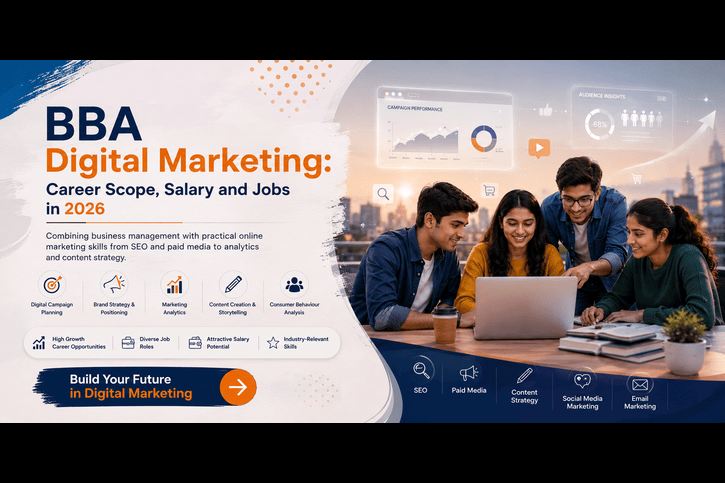
Digital Marketing
Business Analytics
International Business
Finance
Entrepreneurship
Each of the options leads to specific career opportunities. For students who want a practical, career-oriented undergraduate degree with real specialization options, BBA ranks among the best courses after 12th commerce available today.
BCA for Commerce Students
Commerce students can pursue a BCA. This might surprise you, but BCA gives you a three-year technical education in computer applications. You can opt for specializations like:
Cloud Computing
AI and Data Analytics
Cybersecurity
Software Development
For a commerce student, this combination is actually quite powerful. You bring business understanding to technical roles, which is something pure engineering graduates often lack.
Career scope includes IT consulting, product management, data analysis, and digital operations. These are fields where the combination of commerce thinking and technical skill creates a genuinely competitive profile.
Integrated Professional Programs
These programs save time and combine credentials in ways that make practical sense.
B.Com with ACCA gives you both a domestic degree and a globally recognized accounting qualification simultaneously. BBA plus MBA in five years means you enter the workforce earlier than the conventional route. BBA LLB and B.Com LLB are strong options for students drawn toward corporate law and compliance work, both areas with solid demand in 2026.
The advantages you get are: solid industry exposure, time efficiency, and in several cases, international certifications that carry genuine weight with multinational employers.
Professional Courses After 12th Commerce
Several professional qualifications deliver strong career outcomes on shorter timelines. For example,
Company Secretary (CS) remains one of the most respected qualifications for corporate governance roles.
CMA suits students drawn toward cost control and financial management.
CFP (Certified Financial Planner) is growing in demand as personal wealth management becomes a more formalized industry in India.
Financial Modeling certifications, Stock Market programs, and Digital Marketing certifications are shorter commitments, typically six months to two years, and are increasingly valued in startups and financial services hiring.
Technology-Driven Commerce Courses
If you are looking for the best courses after 12th commerce, you can go for technology-driven programs.
Business Analytics, FinTech, Digital Business, E-commerce Management, Data Analytics, and Product Management are some of the fields where commerce knowledge combined with technical fluency creates a profile that employers are actively looking for.
FinTech in particular has created roles that simply didn't have clear hiring pipelines for commerce graduates five years ago. Product Management is another area where commerce students with analytical and communication skills fit surprisingly well.
According to the World Economic Forum’s Future of Jobs Report 2025, there is a growing demand for analytical thinking, AI, and big data, and technological literacy among the fastest-growing skills across industries. Hence, commerce plus technology is no longer a niche combination. It has now become a baseline expectation across a wide range of industries.
After 12th Commerce Courses List (With Career Scope)
Here's a structured after 12th commerce courses list for you to take a look at. If you had Maths, then there’s a list of programs you can opt for, and if you didn’t have it, then there are ample other options as well.
Courses for Commerce Students With Maths
Course
Duration
Career Scope
BBA Business Analytics
3 Years
Data and Business Roles
BCA
3 Years
IT and Software Careers
FinTech Programs
3 to 4 Years
Digital Finance
Economics Hons
3 Years
Analytics and Research
Actuarial Science
3 to 5 Years
Risk and Insurance
Courses for Commerce Students Without Maths
Course
Duration
Career Scope
BBA
3 Years
Management Roles
Digital Marketing
6 to 12 Months
Marketing Industry
Event Management
1 to 3 Years
Media and Events
Hotel Management
3 to 4 Years
Hospitality Industry
BBA LLB
5 Years
Corporate Law
Best Course After 12 Commerce Based on Career Goals
Best Courses for High-Salary Careers
FinTech, Business Analytics, Investment Banking programs, Data Analytics, and BCA with Cloud Computing consistently show strong salary outcomes. These fields reward people who bring both business understanding and technical fluency, which is exactly the profile commerce students can build with the right program.
Best Courses for Entrepreneurship
BBA Entrepreneurship, Digital Business, Family Business Management, and Marketing programs suit students who want to eventually have their own business. The curriculum in these programs tends toward applied learning rather than theory, which fits entrepreneurial thinking better anyway.
Best Courses for International Career Opportunities
ACCA integrated programs, International Business specializations, global finance certifications, and management programs with international exposure give you a credential set that works across borders.
Worth considering seriously if working abroad or with multinational companies is part of your longer-term plan.
Emerging Career Opportunities for Commerce Students in 2026
The roles that commerce graduates are landing in 2026 include Financial Analyst, Investment Consultant, Business Analyst, FinTech Specialist, E-commerce Manager, Digital Marketing Strategist, Product Manager, and Financial Data Analyst.
Several of these didn't have structured hiring pipelines for commerce graduates until quite recently. That's changed, mainly because companies have realized that business fundamentals combined with digital skills produce better professionals than technical hires alone.
How to Choose the Best Course After 12 Commerce
Before you choose any horse after completing your 12th Commerce exams, there are few key things that you need to keep in mind:
Begin with something that is genuinely of interest to you. The job satisfaction over a 30-year career is more important than short-term recognition, and most realize this too late.
Know your strengths and weaknesses. For instance, if you are good in Maths, then you can go for subjects like BBA in Business Analytics, Economics Hons, etc. If you’re not that great, go for the other options like Digital Marketing, BBA LLB, etc.
Analyze potential trends in demand. When choosing courses, check the curriculum quality, specialization choices, and actual placement success.
Next, think about what you want to do after your graduation. Do you want to go for higher education? If yes, there are certain programs that will naturally follow into post-graduate studies. The complete after 12th commerce courses list is pretty much long in 2026, but you can easily narrow it down once you're clear on your own goals and career objectives.
Conclusion
Commerce students today have more genuinely good options before them. Digital business, FinTech, analytics, and technology-driven management have opened career paths that are well-matched to how commerce-trained minds work. CA and B.Com are still solid choices, but they're two options among many now rather than the default answers they once were.
Pick the best course after 12th commerce based on where you want to be in ten years, not where the crowd is going.
Explore undergraduate and professional programs at Manav Rachna, speak with a career counsellor to find the right fit, and get your application in for 2026 admissions.


.png)














 ADDRESS